Free to read · No form · No download
First 48 hours: food survival at the airport and after
What to eat, where to buy it, and what to say, in your first two days in the UK.
1. Orientation
Your first 48 hours in the UK can feel overwhelming. You may be tired and hungry. You may not know where to start.
This chapter gives you clear steps for three things. Finding food. Buying what you need. Staying calm while you do it.
You do not need perfect English to follow it.
2. What you will be able to do
By the end of this chapter, you will:
- Find your way around UK airport food courts and shops.
- Order food at a counter or a self-service machine.
- Find your nearest supermarket after you leave the airport.
- Order a takeaway and a grocery delivery.
- Use simple English phrases in real situations.
- Use calming steps when you feel anxious.
3. Things to know first
These are normal in the UK. None of them mean anything is wrong.
- Airports have many places to buy food. Prices there are higher than outside.
- A sandwich is a full meal in the UK. It is not a snack.
- Queuing matters. Always wait your turn.
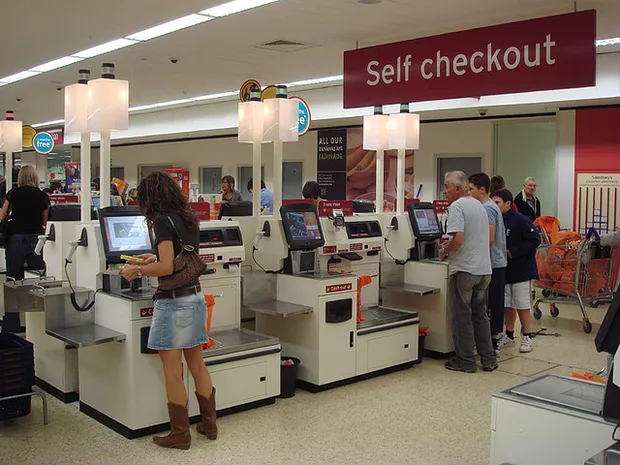
- Self-service machines are everywhere. Staff may not speak to you at all. This is normal.

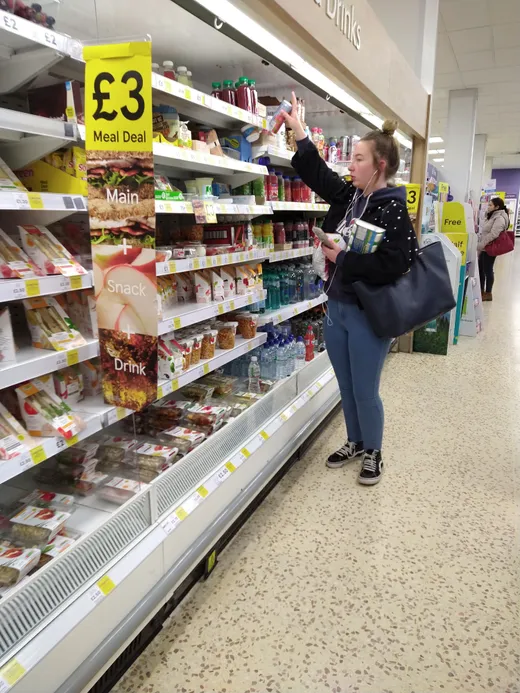
- A “meal deal” is a sandwich, a drink and a snack sold together. It costs less than buying them separately.

4. What they say, and what it means
British staff are often indirect. They say something gentle when they mean something direct. This is politeness, not rudeness.
Whenever you’re ready sounds like an invitation to take your time. In a shop or a café it usually means the opposite. The person is ready, and would like you to be ready too.
It is not a complaint. It is how staff hurry you politely.
You do not have to rush. You can say:
One moment, please.Three other things often feel confusing at first:
- Signs everywhere. Airports have a lot of signage. Look only for the word you need.
- Food courts. Many different shops sit together. They are separate businesses, not one place.
- High prices. Airport food costs more because it is convenient. It is not a mistake and you are not being overcharged.
5. When you land
Your first sixty minutes
Terminals are busy and bright. There will be several places to buy food.
Common shops:
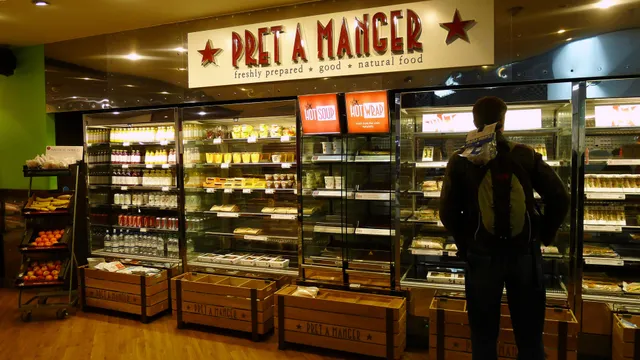
- Pret A Manger — sandwiches, coffee, soups
- Costa Coffee — coffee, pastries, sandwiches
- Boots — meal deals, snacks, drinks
- WHSmith — snacks, drinks, sandwiches
- M&S Food — ready meals, snacks, fruit

What to buy if you are exhausted
- A sandwich
- A bottle of water
- Crisps
- A pot of fruit
- A chocolate bar
- A ready-made salad
- A hot drink
If you feel overwhelmed, do this
- Stop walking.
- Take three slow breaths.
- Choose the nearest food shop.
- Pick one sandwich and one drink.
- Pay by card, or tap your phone.
- Sit down and eat.
If you feel embarrassed, say this to yourself
- Everyone here was new once.
- I don’t need to be perfect.
- I am allowed to take my time.
6. Finding your nearest supermarket
Many people feel the same things at this point. I don’t know which supermarket is cheap. I don’t recognise any of the logos. I’m scared to go inside. All of that is normal.
Using Google Maps
- Open Google Maps.
- Type: supermarket near me
- Look for these names and logos.
| Shop | Logo |
|---|---|
| Aldi | Blue, yellow and red square |
| Lidl | Yellow circle with a blue border |
| Asda | Bright green |
| Tesco | Red text with blue stripes |
| Sainsbury’s | Orange |
| Morrisons | Green with a yellow flower |
| Co-op | Light blue |
| Waitrose | Dark green |
How much they cost
- Cheapest: Aldi, Lidl
- Budget: Asda
- Mid-range: Tesco, Sainsbury’s, Morrisons
- More expensive: Co-op, Waitrose
If you do not know which to choose, start with Tesco. It is common, it is easy for beginners, and it offers delivery.
If you feel nervous going in
- Stand outside for ten seconds.
- Watch how other people go in.
- Follow someone in.
- Take a basket.
- Walk slowly.
- Read the signs above the aisles.
7. Ordering your first takeaway
Apps people use:
- Just Eat
- Uber Eats
- Deliveroo
Adding your address
- Open the app.
- Tap Delivery.
- Enter your postcode.
- Select your building.
- Add instructions for the driver.
- Save it.
Simple first orders
Pizza. Chicken and chips. Wraps. Rice bowls.
If the driver calls and you panic
You can say:
Hello, yes, I’m coming now.8. Ordering your first grocery delivery
This example uses the Tesco app. Other supermarkets work in a similar way.
Booking a delivery time
- Open the Tesco app.
- Create an account.
- Add your address.
- Tap Book a slot.
- Choose a time.
- Confirm.
Adding your shopping
- Tap the search bar.
- Type the name of the item.
- Add it to your basket.
- Check the minimum spend.
- Review substitutions.
- Pay.
A substitution is when the shop sends a different item because yours has sold out. If that worries you, you can turn substitutions off.
9. Your first-night shopping list
Breakfast: cereal, milk, fruit
Lunch: a sandwich, crisps, a drink
Dinner: pasta and sauce, microwave rice, or a ready meal
Snacks: biscuits, chocolate, fruit
If you do not know what to buy, buy this: bread, cheese, fruit, pasta, sauce, milk, cereal.
10. Safe phrases
These phrases stay in English, in every language edition of this chapter. That is deliberate. This is the English you will hear, and the English you will say, so you need to recognise it exactly as it sounds.
- Where can I buy water?
- Do you have vegetarian options?
- Could I have a bag, please?
- Is this for takeaway or eat-in?
- Could I have a fork and knife, please?
11. A conversation at a coffee shop
You: Could I have a cappuccino and a croissant, please?
Server: Eat-in or takeaway?
You: Takeaway, please.
“Eat-in” means you will sit down here. “Takeaway” means you will carry it away with you.
12. If something goes wrong
You do not understand the menu. Say: Could you explain what this includes?
You need a knife and fork. Say: Could I have a fork and knife, please?
You feel rushed. Say: One moment, please.
Someone speaks too quickly. Say: Sorry, could you repeat that slowly?
13. When it feels like too much
If you feel stupid: I am learning. This is normal.
If you feel slow: I don’t need to rush.
If you feel embarrassed: Nobody is watching me. People are busy.
If you feel lost: I can ask for help. It’s okay.
If you feel overwhelmed: One step at a time.
You are not doing anything wrong. The system is just new.
This is one chapter of fifteen
If this is useful to the people you work with, the rest exists.
Chapter 1 is free and open, and it stays that way. The full Food and Drink series runs to fifteen chapters covering airports, supermarkets, takeaways, delivery, shopping and budgeting. Your own tutors and support staff use the materials.
Information for buyers or email contact@riseainternational.co.uk